
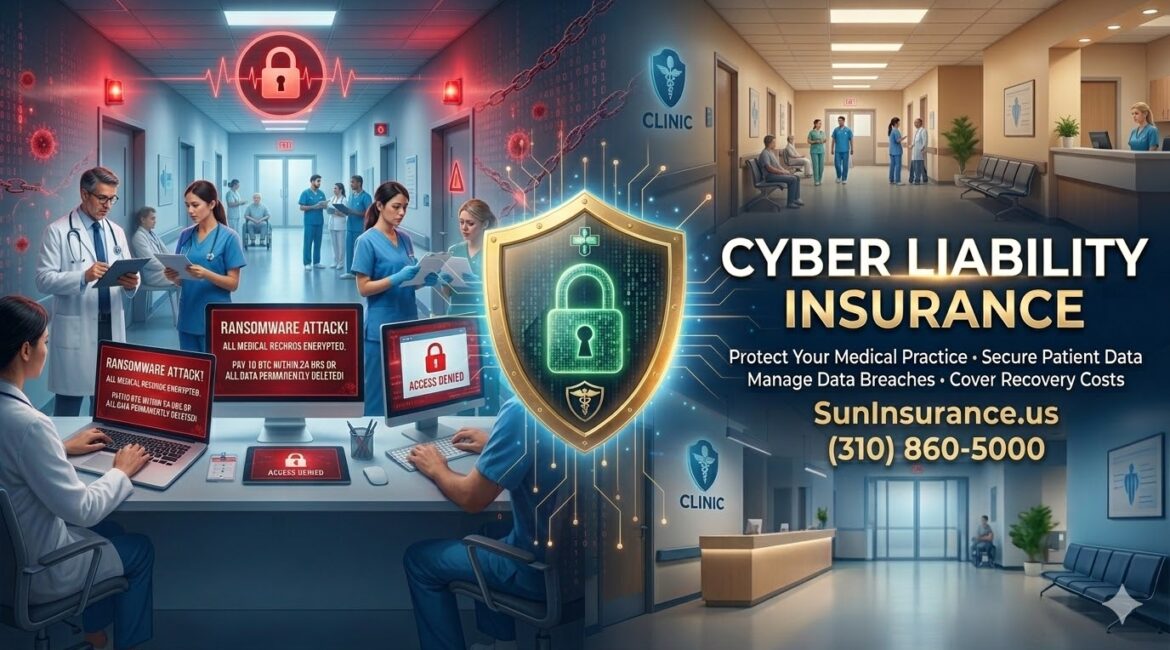
Why One Cyberattack Can Shut Down Your Practice, And Why Smart Doctors and Dentists Protect Themselves Before It Happens 💻🛡️🏥
Imagine a dental office in Santa Monica beginning a normal morning. The front desk staff logs into the scheduling software while hygienists prepare rooms for the first patients of the day. One of the assistants receives an email that appears to come from a dental supply company. The message looks legitimate, complete with a familiar logo and professional formatting, and it simply asks the office to review an updated equipment invoice. A staff member clicks the attachment without a second thought.
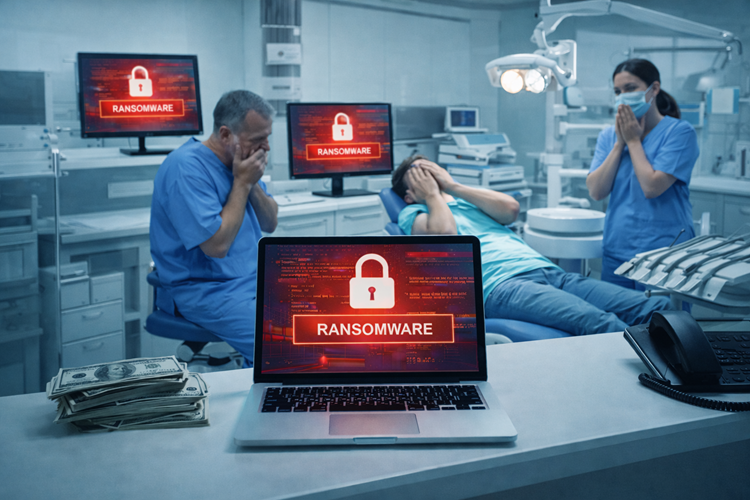
Within minutes, nothing seems unusual, and the office continues its routine. Then the computers begin slowing down. The practice management software suddenly stops responding. Patient records cannot be opened. The screens flash a message that makes everyone in the office freeze in disbelief.
“Your files have been encrypted. Pay $95,000 in Bitcoin within 72 hours, or your data will be destroyed.”
In a single moment, the entire practice is paralyzed. Patient charts are inaccessible. Treatment histories cannot be viewed. Insurance verification systems no longer work. The day’s schedule cannot be confirmed. The waiting room begins to fill with confused patients as staff scrambles to understand what just happened. Appointments are cancelled, procedures are postponed, and the office must close its doors until specialists can determine how to recover the system.
This situation is known as ransomware, and it is one of the fastest-growing forms of cybercrime affecting healthcare practices across the United States. For small medical or dental offices that rely heavily on digital patient records and scheduling systems, a ransomware attack can bring operations to a complete halt. Even if the practice refuses to pay the ransom, the cost of hiring cybersecurity specialists, restoring systems, recovering lost files, and dealing with legal and regulatory obligations can easily reach hundreds of thousands of dollars.
Why One Cyberattack Can Shut Down a Practice — And Why Smart Doctors and Dentists Protect Themselves Before It Happens 💻🛡️🏥
Every medical or dental practice in California has spent years building something valuable. Long hours of study, years of residency or training, major investments in equipment, staff, and facilities, and above all, the trust of patients who rely on the practice for their health and well-being have all contributed to creating a professional environment that many doctors and dentists view as both their life’s work and their livelihood. Yet there is a threat that many healthcare professionals underestimate, not because they are careless, but because it often feels distant and abstract until the day it suddenly becomes very real. That threat is a cyberattack.
Many physicians and dentists still believe that hackers focus primarily on large hospital networks or major corporations — unfortunately, the reality is exactly the opposite. Cybercriminals increasingly target small and medium medical practices precisely because they know those offices often have fewer cybersecurity defenses, fewer IT specialists monitoring networks, and staff members who are busy caring for patients rather than thinking about suspicious emails. For criminals operating behind a computer screen somewhere across the world, a medical or dental office with valuable patient data and modest cybersecurity protection represents an ideal opportunity.
Medical records are incredibly valuable on the black market. While stolen credit card numbers might sell for only a few dollars, a complete medical record containing insurance information, addresses, Social Security numbers, prescription history, and billing details can be worth hundreds of dollars to criminals involved in identity theft and healthcare fraud. That means every dental office, family medicine practice, dermatology clinic, orthodontic office, or specialty medical provider in California is sitting on a digital vault of valuable information, whether they realize it or not.
What makes this situation particularly dangerous is that cyberattacks rarely begin with something dramatic or obvious. In many cases, the entire crisis begins with something as ordinary as an email.
When Patient Data Is Exposed, the Consequences Multiply ⚖️
A cyberattack does not always end with a locked computer system. Sometimes the most serious consequences occur when patient information is accessed or stolen. Under federal HIPAA regulations and California privacy laws, healthcare providers are responsible for protecting the confidentiality of patient information. If a data breach occurs, practices may be required to notify every affected patient, provide credit monitoring services, report the incident to regulators, and undergo detailed cybersecurity investigations.
Consider another scenario involving a small medical clinic in Los Angeles that employs several physicians and serves a large patient base. Hackers gain access to the clinic’s network through a compromised email account belonging to an administrative employee. Over several weeks, the attackers quietly downloaded thousands of patient records without triggering alarms. Eventually, unusual network activity is detected, and the clinic discovers that confidential information, including patient names, addresses, insurance details, and medical histories, has been exposed.
The financial impact begins immediately. The clinic must hire forensic cybersecurity investigators to determine how the breach occurred. Attorneys specializing in healthcare compliance are retained to ensure proper reporting procedures are followed. Every affected patient must be notified, and credit monitoring services must be offered to help protect them from identity theft. Regulators may initiate investigations to determine whether the practice had appropriate safeguards in place.
What started as a simple email compromise has become a financial and legal crisis that could cost hundreds of thousands of dollars. Beyond the immediate financial damage, the clinic’s reputation suffers as patients begin questioning whether their personal information is safe.
Fraudulent Payments and Financial Theft Are Also Growing Risks 💰
Cybercrime does not always involve stealing medical records. Sometimes the target is the practice’s bank account. One increasingly common scheme is business email compromise, in which criminals impersonate trusted vendors or partners and trick offices into sending money to fraudulent accounts.
Imagine an orthodontic practice receiving an email that appears to come from its billing service provider. The message explains that the billing company has changed its payment processing system and asks the office to wire the monthly payment to a new account. The email looks authentic, complete with the correct signature and professional formatting, so the office processes the transfer without suspicion.
Days later, the billing service calls to ask why the payment has not been received. By the time the fraud is discovered, the money has already been transferred through multiple international accounts and is nearly impossible to recover. Losses of $50,000 or more from these schemes are not unusual, and small medical offices can be particularly vulnerable because they handle frequent financial transactions with laboratories, equipment vendors, and billing companies.
Why Medical and Dental Offices in California Face Unique Risks 🌉
California healthcare providers operate under some of the strictest privacy and data protection regulations in the country. In addition to HIPAA, the California Consumer Privacy Act and other state regulations impose additional responsibilities for protecting sensitive information. When a cyber incident occurs, practices must navigate complex legal requirements while restoring operations and maintaining patient trust.
Even a brief interruption can create cascading consequences. Patients may need to reschedule procedures, prescriptions may be delayed, and billing cycles can be disrupted. Staff members may spend days dealing with system recovery rather than focusing on patient care. For a practice that depends on daily appointments to generate revenue, the financial losses from downtime alone can be significant.
What Cyber Liability Insurance Actually Does 🛡️
Cyber liability insurance exists to protect businesses when such incidents occur. For medical and dental offices, the coverage typically goes far beyond simply reimbursing financial losses. A comprehensive cyber insurance policy can provide immediate access to cybersecurity experts who specialize in responding to attacks, containing breaches, and restoring systems as quickly as possible.
If patient data has been compromised, the insurance coverage may help pay for legal counsel, regulatory response, patient notification services, and credit monitoring programs. If ransomware is involved, specialists may assist with negotiating with attackers and recovering encrypted files. If operations are interrupted, the policy may also cover lost income during the period when the practice cannot operate normally.
For doctors and dentists who have spent years building successful practices, cyber liability insurance serves as a safety net, ensuring that a digital crisis does not become a financial catastrophe.
Practical Steps Medical Practices Can Take to Reduce Risk 🔐
Although insurance protection is critical, prevention remains important in reducing the likelihood of an attack. Training staff to recognize suspicious emails is one of the most effective safeguards, as phishing emails remain the most common entry point for cybercriminals. Implementing multi-factor authentication for email accounts and practice management systems adds another layer of protection by preventing unauthorized logins even if passwords are compromised.
Keeping software and operating systems up to date is also essential, since outdated programs often contain vulnerabilities that hackers exploit. Regularly backing up patient records and other important data enables practices to quickly restore systems if ransomware strikes, reducing the pressure to pay criminals for access to files.
These security measures, combined with cyber liability insurance, create a much stronger defense against the growing wave of cybercrime affecting healthcare providers.
The Question Every Practice Owner Should Ask 🤔
Every doctor and dentist has invested enormous effort into building a successful practice. The real question is not whether cybercrime exists—it clearly does—but whether the practice could survive the financial shock of a serious cyber incident. If patient records were locked tomorrow, if thousands of files were exposed in a data breach, or if fraudulent payments drained the practice’s accounts, how would the office recover?
Many practices discover only after an incident that the costs of responding to cybercrime can exceed what they imagined possible. Cyber liability insurance is designed to ensure that when something unexpected happens, the resources are available to restore operations, protect patients, and keep the practice running.
Protect Your Practice Before It Becomes the Next Target 🛡️
Doctors and dentists dedicate their careers to caring for patients, improving lives, and building trusted healthcare environments within their communities. The last thing any professional wants is for years of work to be threatened by a cyberattack that arrives through a single email or compromised system.
Cybercriminals do not discriminate based on a practice’s size. What matters to them is access to valuable information, and medical records are among the most valuable data sources in the digital world. Preparing for this reality is not a sign of fear; it is simply good business judgment.
For medical and dental practices throughout California, cyber liability insurance has become an increasingly important part of protecting everything that has been built.
📞 Request a Cyber Liability Insurance Quote Today
If you operate a medical or dental office in California and would like to understand how cyber liability insurance can protect your practice, the team at Sun Insurance & Financial can help you review your risks and explore appropriate coverage options.
🌐 SunInsurance.us 📞 (310) 860-5000
A short conversation today can help make sure that the practice you spent years building remains protected tomorrow. 🛡️💻
If you run a medical clinic, dental office, or professional practice, securing cyber liability insurance for healthcare practices in California can protect your business from ransomware, data breaches, and lawsuits.
#CaliforniaHealthcare #MedicalPracticeManagement #DentalOfficeLife #CaliforniaDentists #HealthIT #CCPACompliance #CMA #CDA #CaliforniaBusiness #MedicalDirector